You must be ready even if this peak is reachable by the majority of people, not only seasoned trekkers. You must comprehend this, Less training is required if you are accustomed to traveling over long distances in challenging terrain while carrying a weighted backpack.
You will need to conduct more specialized training, though, if you are older or have less hiking experience but believe your general fitness level to be good. Due to the length of the climb, Kilimanjaro, you should focus on more specialized training that is designed for slopes and stairs, as well as developing your muscle memory by carrying a weighted backpack.
It’s crucial to allow oneself adequate time to prepare for a journey of this nature. Make sure you allow yourself enough time to prepare if you simply have a little hiking experience or fitness.
PHYSICAL TRAININGS FOR THE CLIMB
Most people can easily complete the physical difficulty of climbing Mount Kilimanjaro. You must, however, be prepared to complete the required training. You should do workouts four or five times per week in order to keep your leg strength and endurance, which are both essential for success, also you should constantly train carrying a weighted backpack, no matter your level of fitness, this particular training is very essential for success. We strongly suggest that you consult a doctor before beginning a fitness program especially if you are older or have health concerns.
Prior to your scheduled climb, it’s critical to begin your training early, building up your stamina, fitness, and strength. The greatest physical preparation is engaging in physical activity that replicates the demands placed on your body during your ascent of Kilimanjaro. The best approach to increase endurance, in my opinion, is to walk up and down hills while carrying a heavy rucksack. The secret to success is to do this while putting weight in your bag. In order to build the necessary muscle and endurance provided you don’t have access to hills, you should using a stair master or an incline treadmill.
Three to four months before to the commencement of your Kilimanjaro expedition, we advise beginning physical preparation for the mountain. In order to give your body enough time to recover and reenergize before climbing Mount Kilimanjaro, we also advise that you refrain from working out and going for walks during the two weeks prior to your arrival in Tanzania.
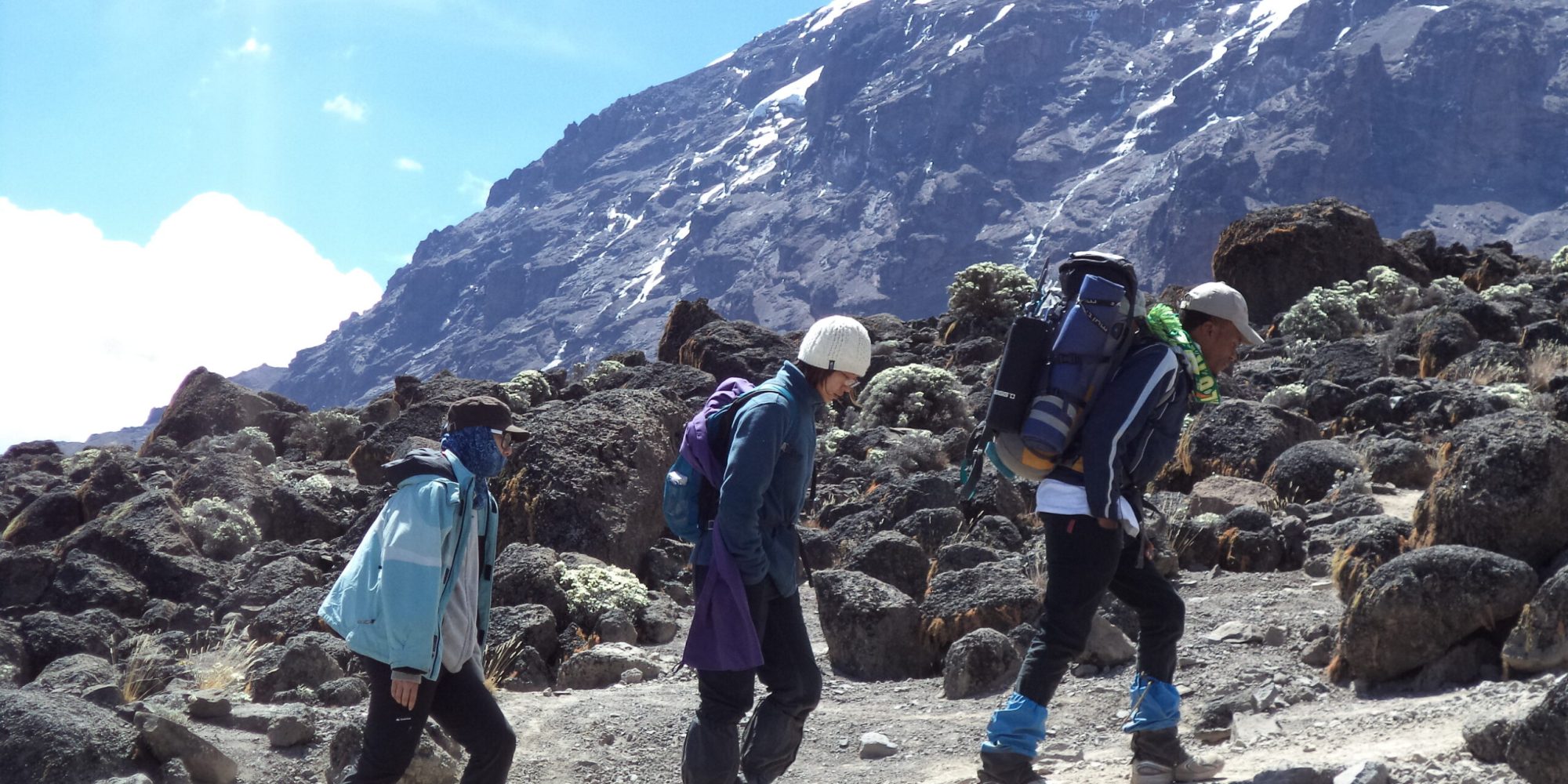
PREPARE YOUR MIND FOR THE CLIMB
Your likelihood of completing the summit ascent will also depend heavily on your level of mental preparation. Your ability to withstand the stress and strain on your body will develop as you push the boundaries of your physical exercise. Get acclimated to your equipment, such as your air mattress and sleeping bag. Take some time to go camping if you aren’t used to it so you can get acclimated to sleeping outside. Test your equipment and become familiar with each piece of gear.
Be ready for every facet of the journey because having a positive mindset is crucial when taking on a task like this. Reminding yourself that thousands of individuals have accomplished this achievement before you and that you can do it too will be useful. However, be ready for setbacks and challenging sections as you attempt to acclimate to the shortage of oxygen during the ascent.
GETTING READY FOR HIGH ALTITUDE
It takes more than just strong cardiovascular endurance to climb a mountain. Even the most active people face physical effects from the lower oxygen saturation that occurs at higher elevations. While aerobic training alone cannot adequately prepare for the conditions above 19,000 feet/5790 meters, it does assist the body get ready for the physical activities that every hiker will engage in throughout the ascent.
Considering that Mount Kilimanjaro is 19,341 feet (5,895 meters) above sea level, each breath there only contains about half as much oxygen as one would at sea level.
Now, individuals who already live at higher elevations are in a better position. Over time, their bodies have changed to function on less saturated oxygen. The high altitude of Mount Kilimanjaro’s peak is not where everyone lives, so that “advantage” may not be everything. There will be some acclimation for all hikers, regardless of their regular altitude.
The key to a good ascent is to allow enough time for acclimatization, so avoid attempting to sprint up the mountain. Plan your climb with enough time to guarantee that your body is properly (and safely!) adjusting to the altitude.

EXERCISES FOR MOUNT KILIMANJARO
Every climber ought to practice regular aerobic exercise in order to get ready for Kilimanjaro. Running, jogging, cycling, and even aerobic dancing courses are all examples of cardiovascular exercise, or simply “cardio.” Cardiovascular exercise boosts respiration and heart rate, making it a useful way to prepare for climbing Kilimanjaro.
Cardio is not the only workout to concentrate on, but it is a crucial one to help your body become in shape. To tone your legs for climbing Mount Kilimanjaro, try to frequently engage in aerobic activities that also strengthen your legs. Cycling or trail running are excellent forms of exercise.
PROGRAM FOR MOUNTAIN HIKING FITNESS
Only use the chart below as a guide. We advise engaging in this form of training three or four days a week, at least eight weeks before to climbing Kilimanjaro.
Warm Up and Stretch | 5 minutes | |
Aerobic Exercise | 15 minutes | Cycling or jogging |
Strength Training | 10-12 reps (3 sets) | Squats – Leg press – Calf raises – Leg curls |
Body-weight Training | 25 reps | Lunges – Sumo Squats |
Aerobic Exercise | 20 minutes | Stairmaster or Cycling or running on an incline |
Cool Down and Stretch | 8 minutes | Cycling or jogging |
Subscribe for updates & promotions
P.o.Box 13352 , Arusha, Tanzania
+255782 896 989
info@sayuniexpeditions.com
+255692123500
zanzibar@sayuniexpeditions.com